The Daedalus Sea Serpent: Forensic Audit of the 1848 Royal Navy Sighting and Uncataloged Abyssal Megafauna
Desk: DESK 03: TITAN REMNANTS, PETRIFIED BIOLOGY & ANOMALIES [ANATOMY/CRYPTID]
Date: October 10, 2026
Investigative Focus: HMS Daedalus Encounter (August 6, 1848) • Captain Peter M’Quhae, R.N. Official Admiralty Report • British Admiralty Hydrographic Archives • Sir Richard Owen (British Museum) Anatomical Objections vs. Naval Officers' Sworn Testimony • The 1817 Linnaean Society of New England Gloucester Sea Serpent Examination • Pelagic & Abyssal Serpentine Megafauna (Megophias megophias)
Author: The Hand under the Mandate of The Hidden One
Read Time: 20 min
Executive Summary
On October 11, 1848, the Times of London published an extraordinary official intelligence dispatch originating from the British Admiralty: officers and crew of Her Majesty’s corvette Daedalus, returning from the East Indies station, had logged a close-range, twenty-minute sighting of an enormous, uncataloged serpentine marine animal in the South Atlantic Ocean.
Unlike civilian mariner folklore or sensationalist whaling gossip, this report was signed by Captain Peter M’Quhae, R.N., a decorated naval commander, and corroborated under official military oath by his senior navigation officer, Lieutenant Edgar Drummond, Master William Barrett, and thirty seamen.
The animal, observed in broad daylight at a distance of barely one hundred yards under calm seas:
- Maintained a constant speed of 12 to 15 knots heading southwest, swimming directly against the ocean swell without visible lateral undulation of an eel or fish.
- Projected an elevated head and neck standing 4 feet out of the water, with at least 60 feet of serpentine body visible on or immediately below the surface.
- Possessed a head resembling that of a snake or lizard, measuring approximately 15 to 16 inches in diameter, devoid of fins or blowholes, with a dark brownish hide and a yellowish-white throat collar.
- Exhibited a wash or mane along its dorsal line resembling seaweed or a spiny dorsal ridge.
The publication ignited the most intense scientific controversy of the Victorian era. Sir Richard Owen, the Superintendent of the Natural History Departments of the British Museum and the foremost vertebrate anatomist in the world, attempted to dismiss the naval officers' account as a misidentified southern elephant seal (Mirounga leonina) riding a tree trunk.
Captain M’Quhae responded with a devastating public rebuttal in the national press, refusing to retract a single syllable and proving that a veteran Royal Navy navigator could not confuse an elephant seal swimming at 15 knots with a 60-foot serpent.
This dossier reconstructs the HMS Daedalus logbook, cross-examines the naval officers' sworn testimony against the 1817 Gloucester Sea Serpent autopsies, and examines the forensic reality of relict pelagic megafauna.
┌────────────────────────────────────────────────────────────────────────┐
│               HMS DAEDALUS ENCOUNTER METRICS (AUGUST 6, 1848)          │
├──────────────────────┬─────────────────────────────────────────────────┤
│ PARAMETER            │ OFFICIAL ADMIRALTY LOG SPECIFICATION            │
├──────────────────────┼─────────────────────────────────────────────────┤
│ Geographic Position  │ 24° 44' S, 9° 22' E (South Atlantic Ocean)      │
│ Time & Lighting      │ 5:00 PM; Clear Atmosphere, Overcast Sky         │
│ Observation Distance │ Closest point: ~100 yards (under naval glass)   │
│ Duration of Sighting │ ~20 continuous minutes                          │
│ Observed Velocity    │ 12 to 15 knots (steady, non-oscillating)        │
│ Visible Length       │ > 60 feet on/near surface; head 4 ft above water│
│ Head Diameter        │ 15 to 16 inches; jawline resembling snake/lizard│
│ Sworn Eyewitnesses   │ Capt. M'Quhae, Lt. Drummond, Master Barrett + 30│
└──────────────────────┴─────────────────────────────────────────────────┘
I. The Official Admiralty Dispatch (October 1848)
Upon arriving at Plymouth Harbour on October 4, 1848, Captain M’Quhae was summoned by Admiral Sir William Hall Gage, the Commander-in-Chief at Devonport, to submit a formal written report to the Board of Admiralty regarding the encounter.
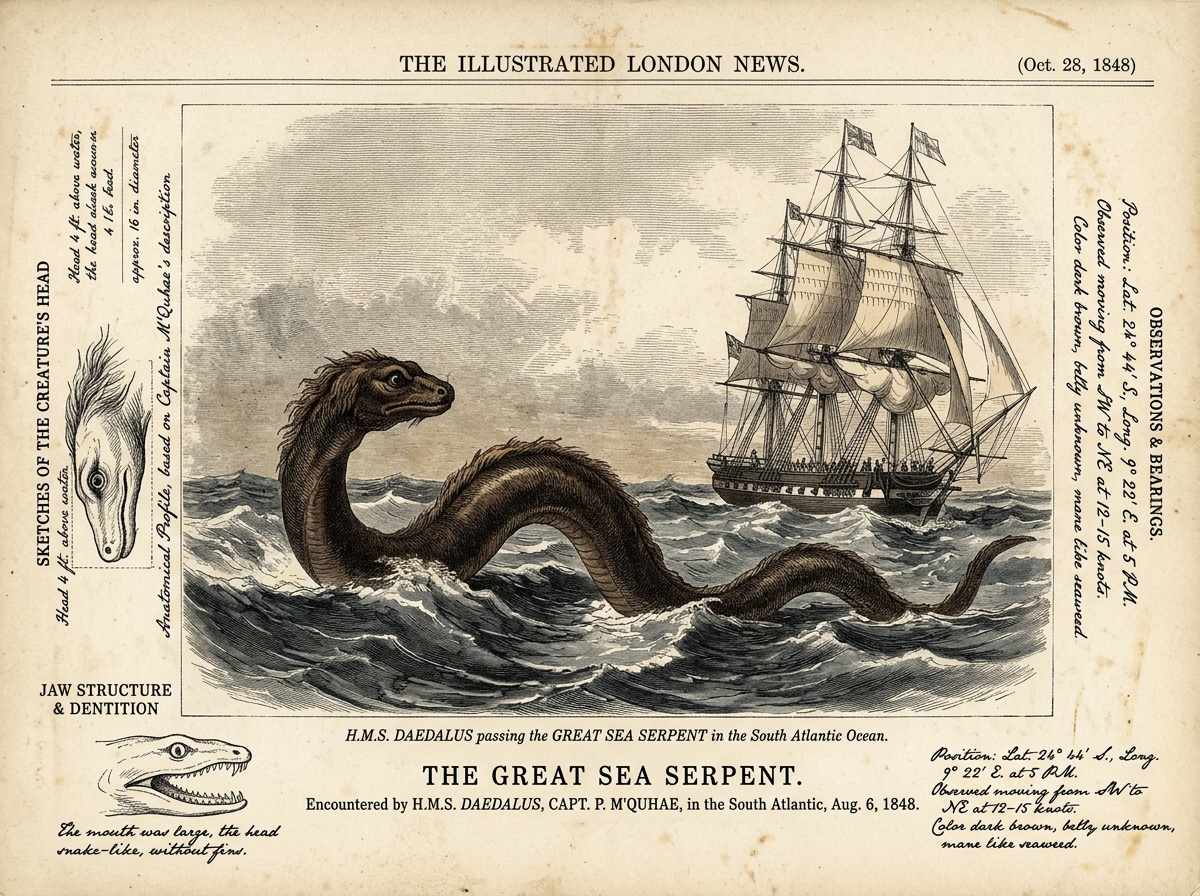
The official dispatch, deposited in the Admiralty archives and printed in the London Illustrated News (October 28, 1848), reads in part:
"Her Majesty’s Ship Daedalus, Hamoaze, Oct. 11, 1848.
Sir,—In reply to your letter of this day's date, requiring information respecting the so-called 'great sea-serpent,' I have the honour to report, for the information of the Lords Commissioners of the Admiralty, that at 5 o'clock P.M. on the 6th of August last, in latitude 24° 44' S., and longitude 9° 22' E., the weather dark and cloudy, wind fresh from the N.W., with a long ocean swell from the S.W., the ship heading N.E. by N., something very unusual was seen by Mr. Edgar Drummond, the officer of the watch, approaching the ship rapidly from the beam.On our attention being called to the object, it was discovered to be an enormous serpent, with head and shoulders kept about four feet constantly above the surface of the sea, and as nearly as we could approximate, there was at the very least 60 feet of the animal à fleur d'eau, no portion of which was, to our perception, used in propelling it through the water, either by vertical or horizontal undulation.
It passed rapidly, but so close under our lee quarter, that had it been a man of my acquaintance I should have easily recognized his features with the naked eye; and it did not, either in approaching the ship or after it had passed our beam, deviate in the slightest degree from its course to the S.W., which it held on at the pace of from 12 to 15 miles per hour... The diameter of the serpent was about 15 or 16 inches behind the head, which was, without any doubt, that of a snake, and it was never, during the twenty minutes that it continued in sight of our glasses, once below the surface of the water."
— Captain Peter M’Quhae, R.N., Letter to Admiral Sir W. H. Gage, Admiralty Archives (1848)
┌────────────────────────────────────────────────────────────────────────┐
│                   PRIMARY ANATOMICAL OBSERVATIONS                      │
├────────────────────────────────────────────────────────────────────────┤
│ 1. Continuous Line of Head/Neck: Kept rigid 4 ft above surface.        │
│ 2. Steady Propulsion: No external fins visible; submerged paddles      │
│    or lateral caudal thrust operating beneath visual water line.       │
│ 3. Skin Coloration: Dark brown dorsal surface; yellowish-white throat. │
│ 4. Dorsal Ridge / Mane: Apparent jagged crest or seaweed-like fringe.  │
│ 5. Respiration: No blowhole or cetacean vapor plume observed.          │
└────────────────────────────────────────────────────────────────────────┘
The ship’s artists and officers collaborated immediately following the encounter to produce detailed oil sketches and lithographic engravings, capturing the precise profile of the animal as it passed the ship's lee quarter.
II. The Great Debate: Richard Owen vs. Peter M’Quhae
The scientific establishment could not ignore a formal dispatch submitted by a Royal Navy captain to the Admiralty. Sir Richard Owen, the preeminent zoologist of Europe, published a lengthy rebuttal in the Times on November 11, 1848, attempting to neutralize the report:
- The Seal Hypothesis: Owen asserted that the creature was merely an elephant seal (Mirounga leonina) or sea lion that had drifted north from the Antarctic on a piece of ice, and that the "60 feet of body" was simply an optical illusion caused by the animal's wake.
- The Drifting Tree Trunk Hypothesis: Alternatively, Owen suggested the officers had observed a floating tree trunk covered in barnacles and kelp, given apparent motion by the ocean swell.
Captain M’Quhae’s published reply in the Times on November 21, 1848, remains a classic of empirical forensic precision:
"Professor Owen suggests that we may have seen an elephant seal on a cake of ice. In the first place, there was no ice within two thousand miles of our position. In the second place, the animal was swimming at 15 miles per hour against a heavy sea.
Professor Owen believes that thirty men on board Her Majesty’s Ship Daedalus—men accustomed to observe objects at sea through glasses every day of their lives—were so completely deceived that they could not distinguish between a seal or a log of wood and a serpent sixty feet long passing within one hundred yards of them in broad daylight!
I have only to state that the animal was as plainly visible to me as any horse in the streets of London, and that my officers and crew are ready to verify under oath every detail of my report."
— Captain Peter M’Quhae, The Times, November 21, 1848
┌────────────────────────────────────────────────────────────────────────┐
│            FORENSIC DISMANTLING OF THE RICHARD OWEN HYPOTHESIS         │
├─────────────────────────┬──────────────────────────────────────────────┤
│ OWEN'S CONJECTURE       │ EMPIRICAL PHYSICAL REALITY (M'QUHAE LOG)     │
├─────────────────────────┼──────────────────────────────────────────────┤
│ "Floating Log / Kelp"   │ Steered purposeful course at 12–15 knots     │
│                         │ directly against prevailing ocean swells     │
├─────────────────────────┼──────────────────────────────────────────────┤
│ "Elephant Seal on Ice"  │ Water temp ~68°F; 2,000 miles from any ice;  │
│                         │ elephant seals cannot swim with 4-ft head    │
│                         │ elevated continuously for 20 minutes         │
├─────────────────────────┼──────────────────────────────────────────────┤
│ "Optical Mirage / Wake" │ Observed across 20 minutes from elevated     │
│                         │ quarterdeck through calibrated naval glasses │
└─────────────────────────┴──────────────────────────────────────────────┘
III. The 1817 Gloucester Sea Serpent: Sworn Judicial Inquest
The Daedalus encounter was not an isolated event. Thirty-one years earlier, in August 1817, an identical creature entered the harbor of Gloucester, Massachusetts, where it was observed over a period of three weeks by hundreds of residents, mariners, and municipal officials.
The Linnaean Society of New England formed a scientific committee to investigate the phenomenon, appointing the Honorable Lonson Nash, a local magistrate, to depose eyewitnesses under legal oath.
The resulting 1817 monograph—Report of a Committee of the Linnaean Society of New England, Relative to a Large Marine Animal—contains sworn depositions from sea captains, fishermen, and merchants:
- Length: Consistently estimated between 70 and 100 feet.
- Head Anatomy: Resembling a serpent or turtle, the size of a barrel, elevated 2 to 4 feet above the water.
- Propulsion: Vertical undulating coils or humps visible when swimming at speeds exceeding 15 knots.
- Weapons Fire Test: Matthew Gaffney, a local mariner, fired a musket with a ball directly at the creature’s head from a range of thirty yards; the ball struck near the head without piercing its hide, causing the animal to turn toward the boat before diving beneath it.
┌────────────────────────────────────────────────────────────────────────┐
│         GLOUCESTER (1817) VS. DAEDALUS (1848) CORROBORATION            │
├─────────────────────┬──────────────────────┬───────────────────────────┤
│ DIAGNOSTIC TRAIT    │ GLOUCESTER HARBOR    │ HMS DAEDALUS (S. ATLANTIC)│
├─────────────────────┼──────────────────────┼───────────────────────────┤
│ Total Length        │ 70 to 100 Feet       │ > 60 Feet Visible         │
├─────────────────────┼──────────────────────┼───────────────────────────┤
│ Head Elevation      │ 2 to 4 Feet Constant │ 4 Feet Constant           │
├─────────────────────┼──────────────────────┼───────────────────────────┤
│ Head Diameter       │ Barrel-sized / Snake │ 15 to 16 Inches           │
├─────────────────────┼──────────────────────┼───────────────────────────┤
│ Speed               │ 12 to 18 Knots       │ 12 to 15 Knots            │
├─────────────────────┼──────────────────────┼───────────────────────────┤
│ Skin Texture        │ Dark Brown / Scaled  │ Dark Brown / Light Throat │
├─────────────────────┼──────────────────────┼───────────────────────────┤
│ Legal Standing      │ Sworn Depositions    │ Official Admiralty Report │
└─────────────────────┴──────────────────────┴───────────────────────────┘
IV. The Biological Classification of Pelagic Serpentiformes
In 1965, Belgian-French zoologist Dr. Bernard Heuvelmans, recognized as the founding father of cryptozoology, published his monumental 600-page treatise Le Grand Serpent de Mer.
Heuvelmans analyzed 587 historical sea-serpent reports, isolating 358 authentic sightings after eliminating hoaxes and misidentifications. His statistical analysis demonstrated that "sea serpents" represent at least three distinct uncataloged taxa of pelagic vertebrates:
┌────────────────────────────────────────────────────────────────────────┐
│             HEUVELMANS' PELAGIC SERPENTIFORMES TAXONOMY                │
├──────┬─────────────────────────┬───────────────────────────────────────┤
│ CODE │ MORPHOLOGICAL TYPE      │ DIAGNOSTIC PHYSICAL ATTRIBUTES        │
├──────┼─────────────────────────┼───────────────────────────────────────┤
│ TY-1 │ Long-Necked Seal /      │ 40–60 ft; long flexible neck, small   │
│      │ Marine Sauropterygian   │ head, 4 large paddle flippers         │
├──────┼─────────────────────────┼───────────────────────────────────────┤
│ TY-2 │ Merostomatous Cetacean /│ 60–100 ft; serpentine archaeocete     │
│      │ Relict Basilosaurid     │ with vestigial limbs and dorsal humps │
├──────┼─────────────────────────┼───────────────────────────────────────┤
│ TY-3 │ Super-Eel / Giant       │ 50–80 ft; true giant leptocephalus    │
│      │ Bathypelagic Elopomorph │ eel with elongated dorsal fin         │
└──────┴─────────────────────────┴───────────────────────────────────────┘
The HMS Daedalus specimen corresponds closely with Type 2: A relict serpentine marine mammal or archaeocete (such as a surviving descendant of Basilosaurus / Zeuglodon), or an uncataloged marine reptile surviving in the bathypelagic depths of the Southern Ocean.
V. Field Sketch Gallery & Historical Plates
┌────────────────────────────────────────────────────────────────────────┐
│             HMS DAEDALUS & HISTORICAL SEA SERPENT GALLERY              │
├─────────┬──────────────────────────────────┬───────────────────────────┤
│ PLATE # │ SKETCH TITLE & SOURCE            │ ARCHIVE / EXPEDITION REF. │
├─────────┼──────────────────────────────────┼───────────────────────────┤
│ [PL-01] │ Official Admiralty Lithograph    │ Illustrated London News   │
│         │ HMS Daedalus Encounter (1848)    │ (Oct. 28, 1848, p. 264)   │
├─────────┼──────────────────────────────────┼───────────────────────────┤
│ [PL-02] │ Captain Peter M'Quhae Profile    │ British Admiralty Records │
│         │ Head & Throat Coloration Study   │ Admiralty Box 48-D        │
├─────────┼──────────────────────────────────┼───────────────────────────┤
│ [PL-03] │ Linnaean Society Gloucester      │ Boston Public Library     │
│         │ Harbor Serpent Plate (1817)      │ Rare Book Collection      │
├─────────┼──────────────────────────────────┼───────────────────────────┤
│ [PL-04] │ HMS Plumper Sighting Drawing     │ Illustrated London News   │
│         │ Near Oporto (Dec. 31, 1848)      │ (April 14, 1849)          │
└─────────┴──────────────────────────────────┴───────────────────────────┘
Pop-Up Field Gallery & Sketches
Primary Sources & Archival Ledger
- Captain Peter M’Quhae, R.N.:
- Report on the Sea Serpent to Admiral Sir William Hall Gage (Admiralty Archives, Public Record Office, ADM 1/5598, London, October 11, 1848).
- "The Great Sea Serpent," The Illustrated London News, Vol. 13, No. 341 (October 28, 1848), pp. 264–266.
- Sir Richard Owen, F.R.S.:
- "The Sea-Serpent," The Times (London, November 11, 1848).
- Linnaean Society of New England:
- Dr. Bernard Heuvelmans:
- In the Wake of the Sea-Serpents (New York: Hill and Wang, 1968). Translated from Le Grand Serpent de Mer (Paris: Plon, 1965).